
Planning a smart home during your renovation — or adding one to the home you already live in — and wondering what it will actually cost? This page walks you through every part of a smart home the way we would in our showroom: what each piece does, what it costs in Singapore, and the one or two decisions that genuinely change your quotation. As you read, you can tap answers to the questions along the way — at the end, everything you’ve told us comes together into a summary you can review and send us, and we’ll WhatsApp you a ballpark figure within one working day.
Every home is different, so we quote “à la carte” — you pay only for the hardware and services you actually need. You don’t need to count switches or measure curtain tracks to get started (that was the old version of this page — we’ve learned!). Rough answers are enough for a real ballpark, and our team will fine-tune the numbers with you on WhatsApp. Plans change, quantities change — we’re flexible on changes and returns, so nothing you answer here locks you in.
First — a little about your home
The single biggest factor in any smart home quotation is where you are in your journey. During a renovation, your electrician is already opening walls — wiring for smart switches and curtain power points costs very little extra. In a finished home, everything can still be done, but the product choices shift toward retrofit-friendly options.
Just as important: the type of home. A 3-room flat, a condominium and a three-storey landed house need very different amounts of hardware to cover — it’s the first thing that sets the scale of any ballpark.
Smart switches
Smart lighting in Singapore homes is usually achieved by replacing your lighting wall switches with smart switches, so your existing lights — downlights, cove lights, ceiling fans with lights — become app-, voice- and automation-controllable without changing the lights themselves. Switches come in 1-gang, 2-gang and 3-gang variants matching your electrical layout, and it’s fine to leave some rooms out (bomb shelter, helper’s room) — many of our clients do.
Hardware-wise, smart wall switches cost between $45 and $99 per switch depending on the model and number of gangs — the Aqara D1 starts at $45, the newer H1 from $55, and the flagship Z1 Pro (which handles both wiring types and up to 4 gangs on one plate) from $70. If you’re choosing between models, this comparison article is a good starting point. Two-way switches (the same light controlled from two walls) work fine with smart switches — count them as ordinary switches for now and we’ll handle the wiring details later. There’s also a simple water heater smart switch that many clients call their favourite upgrade: your heater is warm when you wake, and never left on all day.
The neutral wire question (worth 60 seconds if you’re renovating)
Switch boxes in Singapore developments do not have a neutral wire by default. Smart switches come in neutral and no-neutral versions — both work well, and you can mix them in one home — but neutral switches are generally more capable (they even strengthen your Zigbee network as signal repeaters). Here’s why this matters now: pulling neutral wires is cheap and easy while your renovation walls are open, and expensive after. If you’re renovating, ask your electrician about adding neutrals to your switch boxes — it’s a now-or-never decision. Living in a finished home? No-neutral smart switches exist precisely for you, and they work great. More detail: neutral vs no-neutral smart switches.
-
Product on sale
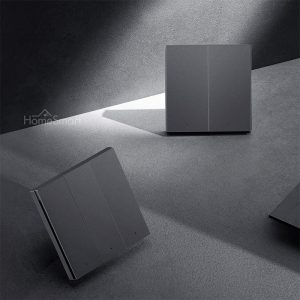 Aqara H1 Smart Wall SwitchPrice range: $51.00 through $93.00
 -
Product on sale
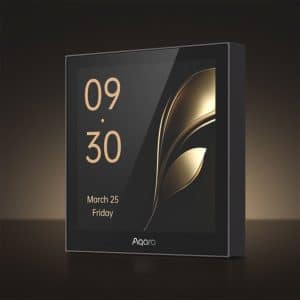 Aqara Panel Switch S100Original price was: $199.00.$183.00Current price is: $183.00.
 -
Product on sale
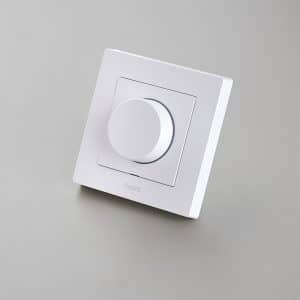 Aqara Dimmer Switch H2Original price was: $88.00.$81.00Current price is: $81.00.
 -
Product on sale
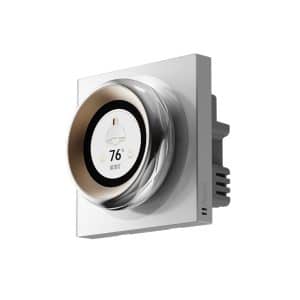 Aqara Touchscreen Dial V1Original price was: $329.00.$304.00Current price is: $304.00.
 -
Product on sale
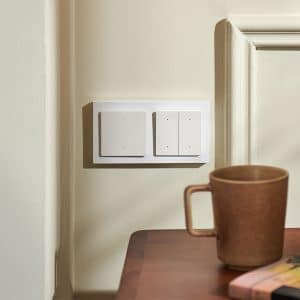 Aqara Light Switch H2Price range: $81.00 through $90.00
 -
Product on sale
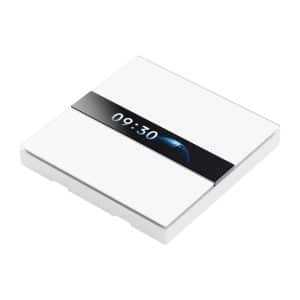 Aqara Display Switch V1Original price was: $199.00.$183.00Current price is: $183.00.
 -
Product on sale
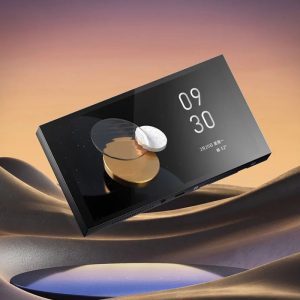 Aqara Panel Hub / MagicPad S1 PlusOriginal price was: $699.00.$660.00Current price is: $660.00.
 -
Product on sale
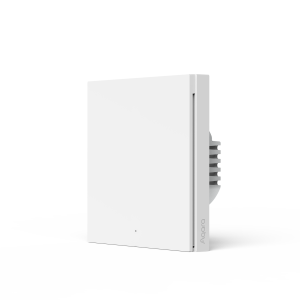 Aqara H1 Smart 20A SwitchOriginal price was: $67.00.$62.00Current price is: $62.00.
 -
Product on sale
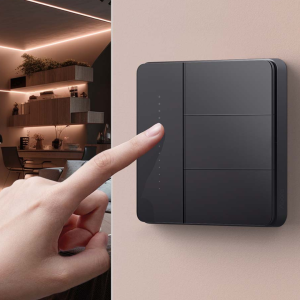 Aqara Z1 Pro Smart Wall SwitchPrice range: $64.00 through $93.00


Downlights, track lights and false ceilings
Beyond switching your existing lights, renovation is also the moment to think about the lights themselves — recessed downlights and modular smart track lighting (spotlights, floods and grille bars that snap anywhere along a track). Whether these are options for you depends mostly on one thing: your ceiling.
Why false ceilings matter: recessed downlights and flush-mounted track systems need a false ceiling (or an L-box) to sit inside — that’s a renovation-time carpentry decision, not something to retrofit later. No false ceiling planned? No problem: surface-mounted tracks install on any ceiling, anytime. Telling us your ceiling plan lets us point you at the right family immediately.
-
Product on sale
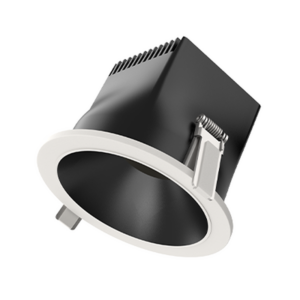 Aqara Smart Downlights T2 LitePrice range: $73.00 through $79.00
 -
Product on sale
 Aqara Ceiling Light T1MPrice range: $149.00 through $186.00
 -
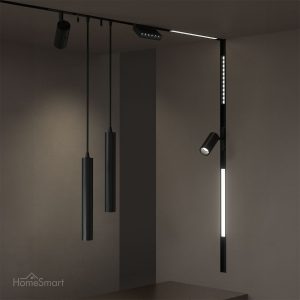 Aqara H1 Pro Series Magnetic Track LightsPrice range: $69.00 through $129.00
 -
Product on sale
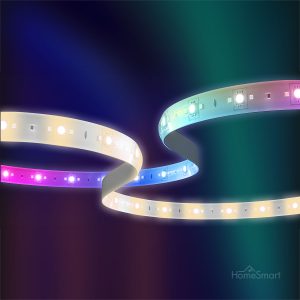 Aqara LED Strip T1Original price was: $69.00.$64.00Current price is: $64.00.
Smart home hubs (don’t worry about this one)
Our devices talk over Zigbee, a wireless protocol that needs a hub — think of it as the router of your smart home. Some hubs double as home-monitoring cameras or infrared blasters that control your air-conditioners. As a rule of thumb you’ll want roughly one hub per 500 sqft and at least one per storey, and homes with neutral smart switches often need fewer, since those switches repeat the Zigbee signal.
The reason there’s no question here: the right hub follows from everything else you pick, so we’ll simply include the correct one in your ballpark — it’s one line on the quote, not a decision you need to research.
-
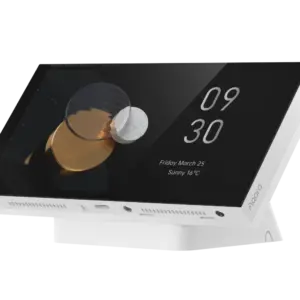 Aqara Panel Hub S1 Plus (Desktop Version)$559.00
 -
Product on sale
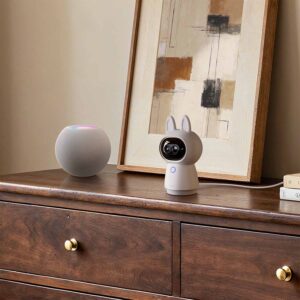 Aqara G350 Camera HubOriginal price was: $299.00.$276.00Current price is: $276.00.
 -
Product on sale
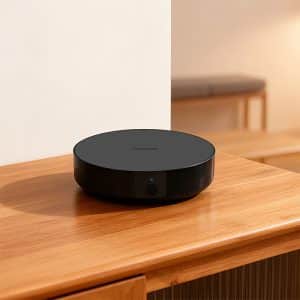 Aqara M200 HubOriginal price was: $149.00.$137.00Current price is: $137.00.
 -
Product on sale
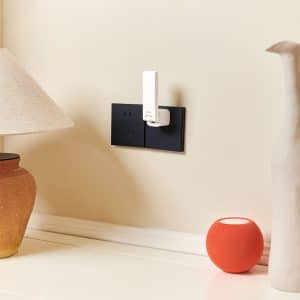 Aqara M100 HubOriginal price was: $89.00.$82.00Current price is: $82.00.
 -
Product on sale
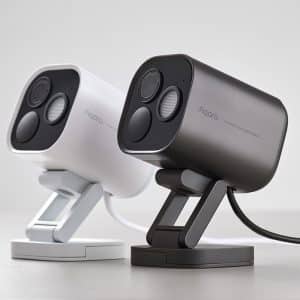 Aqara Camera Hub G5 ProPrice range: $366.00 through $430.00
 -
Product on sale
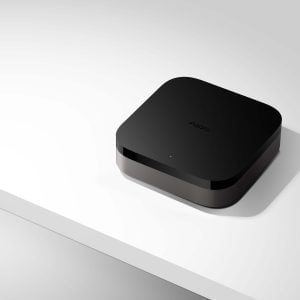 Aqara M3 HubOriginal price was: $289.00.$267.00Current price is: $267.00.
 -
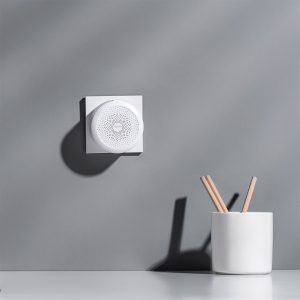 Aqara M1S Hub Gen 2$99.00
 -
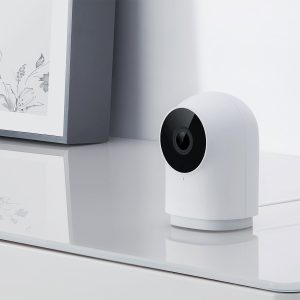 Aqara G2H Pro Camera Hub$139.00
 -
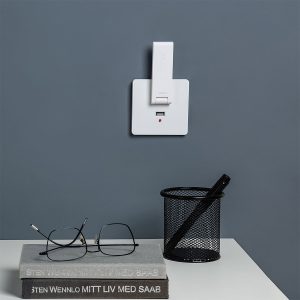 Aqara E1 Hub$49.00


Smart curtains and blinds
Two routes here. For a new home or new curtains, a motorised track system (motor + custom-length track, curtains open with app, voice, schedule or a gentle hand-tug) starts from about $409 per window. Already have curtains you love? A retrofit curtain driver that rides along your existing rod starts from $140. Things worth knowing: day-and-night curtains need two tracks and two motors; tracks run up to 6 metres; both centre-open and side-open configurations work; and the motor needs a power point near the ceiling — another detail that’s nearly free during renovation. We fabricate tracks, not fabrics, so your curtain vendor stays in the picture (or ask us to introduce one of our partners).
Smart door locks
Fingerprint, PIN, NFC, app — and no more “did I lock the door?” moments. Smart locks are the one category where we consider professional installation essential, and it’s included in how we quote them. Entry models start from $199, with most of the popular kits landing between $259 and $549. When we prepare your quotation we’ll ask for four quick photos — door front, back, side, and frame — to confirm compatibility with your door and gate before you commit to anything.
Sensors, security and cameras
Wireless, battery-powered sensors are the glue of a smart home: lights that come on when motion is detected, the aircon that shuts off when a window opens, a nudge on your phone when the door opens while you’re away. Because they’re stick-anywhere wireless, they’re as easy to add to a 20-year-old flat as to a new BTO — and camera hubs add home monitoring without a separate CCTV system.
-
Product on sale
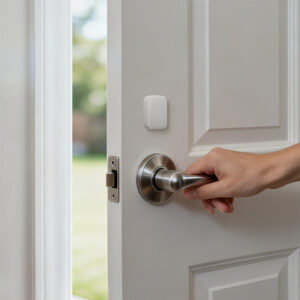 Aqara Multi-State Sensor P100Original price was: $69.00.$64.00Current price is: $64.00.
 -
Product on sale
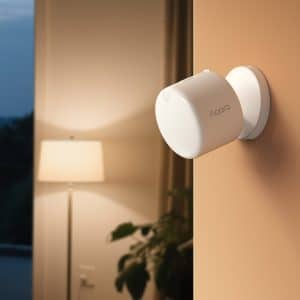 Aqara Presence Sensor FP300Original price was: $99.00.$91.00Current price is: $91.00.
 -
Product on sale
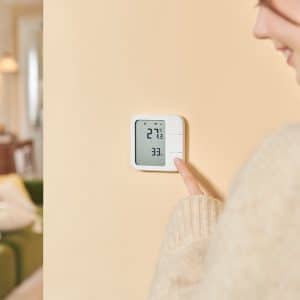 Aqara Climate Sensor W100Original price was: $79.00.$74.00Current price is: $74.00.
 -
Product on sale
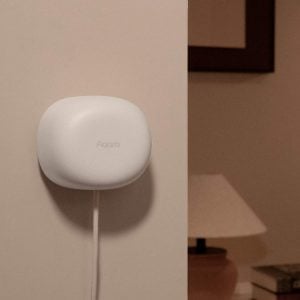 Aqara Presence Sensor FP1EOriginal price was: $79.00.$73.00Current price is: $73.00.
 -
Product on sale
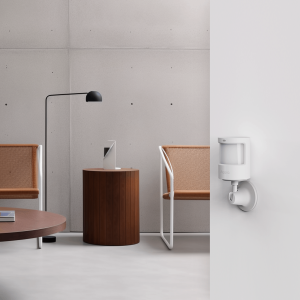 Aqara Motion and Light Sensor P2Original price was: $55.00.$51.00Current price is: $51.00.
 -
Product on sale
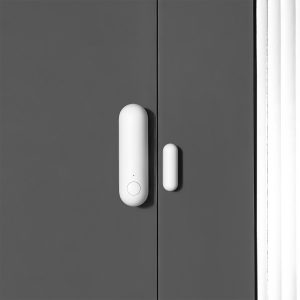 Aqara Door and Window Sensor P2Original price was: $52.00.$48.00Current price is: $48.00.
 -
Product on sale
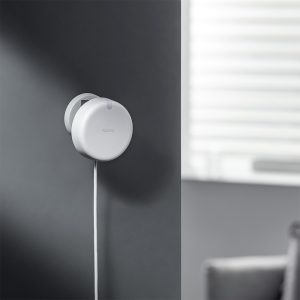 Aqara Presence Sensor FP2Original price was: $139.00.$128.00Current price is: $128.00.
 -
Product on sale
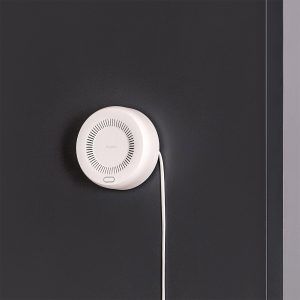 Aqara Smart Gas DetectorOriginal price was: $79.00.$74.00Current price is: $74.00.
 -
Product on sale
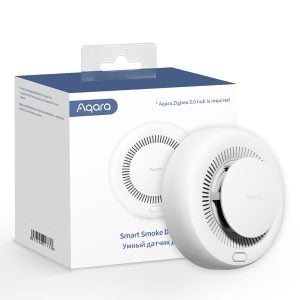 Aqara Smart Smoke DetectorOriginal price was: $79.00.$74.00Current price is: $74.00.


Aircon and climate control
If your air-conditioners use infrared remotes, an IR-capable hub can bring them into your smart home — schedules, “cool the bedroom before I arrive”, auto-off when windows open. It’s one of the cheapest comfort upgrades in the whole catalogue since it usually rides on a hub you’d own anyway.
What does a smart home cost in Singapore?
Real numbers, from our current price list — the same prices you’ll see in our store and configurator:
- Smart wall switches: $45–$99 per switch (model and gang count), so a typical whole-home setup of 8–15 switches runs $360–$1,500 in hardware.
- Switch installation: $25 per switch with a $200 minimum, GST included — most whole-home installations land at $200–$375. Your own electrician can also install them, especially during a renovation.
- Smart door locks: from $199; most popular kits $259–$549, plus installation.
- Smart curtains: retrofit drivers from $140 per window; full motorised track systems from $409 per window (fabric not included).
- Sensors and hubs: typically the smallest line on the quote — most homes add a few sensors and one or two hubs.
Put together, making every light switch in your home smart usually costs $600–$1,900 including installation, before optional categories like locks and curtains. Renovating? Budget a little with your electrician for neutral wires and ceiling power points — pulled during reno they cost very little and open up your best options.
Want exact numbers instead of ranges? Our smart home configurator prices your exact product list live, straight from the same catalogue our showroom uses.
Get your ballpark quotation
The form below is filled out with the responses you’ve provided above. To get a ballpark quotation, please fill out the rest of the form; our sales team will get in touch with you within one working day via WhatsApp or email — no obligation for a first estimate. Prefer precise numbers right now? Build your exact setup in our configurator — it carries your answers over.
Common cost questions
How much does smart switch installation cost in Singapore?
Our licensed installers charge $25 per switch with a $200 minimum, GST included. The switches themselves cost $45–$99 each depending on model and gang count. If you’re renovating, your own electrician can usually install smart switches as part of the electrical works.
How much does a smart home cost for a 4-room HDB?
A typical 4-room HDB with smart switches throughout uses 8–12 switches, which works out to roughly $700–$1,500 including installation. A smart door lock adds $259–$549 for most kits, and smart curtains add from $140 (retrofit) or $409 (motorised track) per window. Most of our 4-room clients land somewhere between $1,000 and $2,500 all-in, depending on how many categories they include.
Do smart switches need a neutral wire?
No — no-neutral smart switches work in standard Singapore switch boxes, which don’t carry a neutral wire by default. Neutral versions are somewhat more capable (and act as Zigbee repeaters), so if you’re renovating it’s worth asking your electrician to pull neutral wires while the walls are open. You can mix neutral and no-neutral switches freely in one home.
Can I make my home smart after renovation is done?
Yes. No-neutral smart switches, retrofit curtain drivers, battery-powered sensors and smart locks are all designed for finished homes — no hacking, no rewiring. The only things that genuinely need renovation timing are pulled neutral wires, ceiling power points for curtain motors, and recessed lighting in false ceilings.
Thanks for considering us — whether you send the form, build your own quote in the configurator, or just walk into our Keong Saik showroom, we look forward to making your home a little smarter.